When a machine breaks down, every minute means lost output. Yet in many factories, breakdown reports still go like this: the operator tells the line leader, the leader calls or messages maintenance, and the technician has to work out which machine is meant. Information gets lost, and repair history is never properly recorded.
One QR code per machine
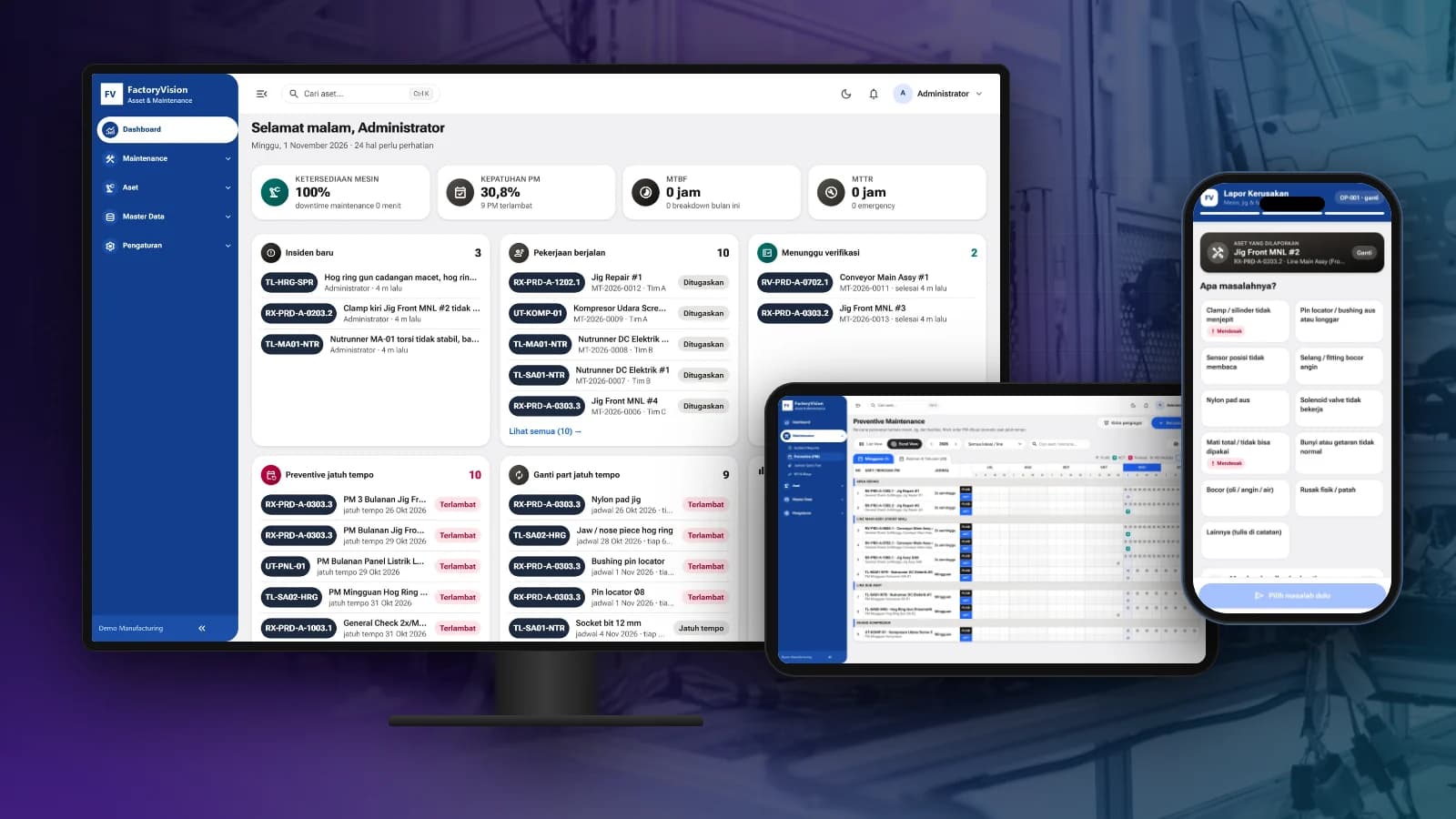
A much simpler approach: put a QR code on every machine or asset. When something goes wrong, the operator scans it with a phone, picks the type of problem, adds a photo and submits. The system immediately knows which machine, which line and who reported it.
From report to work order automatically
Each report becomes a work order and is routed to the technician on duty. Every step is recorded: when it was reported, when the technician arrived, which spare parts were used, and when the machine was back in operation.
Data that used to be lost is now measurable
- MTTR (Mean Time To Repair): average repair time.
- MTBF (Mean Time Between Failures): average time between breakdowns.
- Cost per asset: total spare parts and labour for each machine.
- Repeat failures: which machines or components fail most often.
With this data, decisions such as replacing an old machine or stocking certain spare parts can be based on facts.
Go beyond reactive: preventive maintenance
The end goal is fewer sudden breakdowns. A good maintenance system schedules preventive maintenance by time or operating hours, with checklists that technicians fill in on site. Breakdown history from QR reports helps set the right schedule.
Easy to roll out
Implementation can start with an asset register and printed QR labels, with no special hardware: operators and technicians just use their phones.
Seautomate's FactoryVision Maintenance combines QR breakdown reporting, work orders, preventive maintenance, and KPIs and cost per asset in one system.