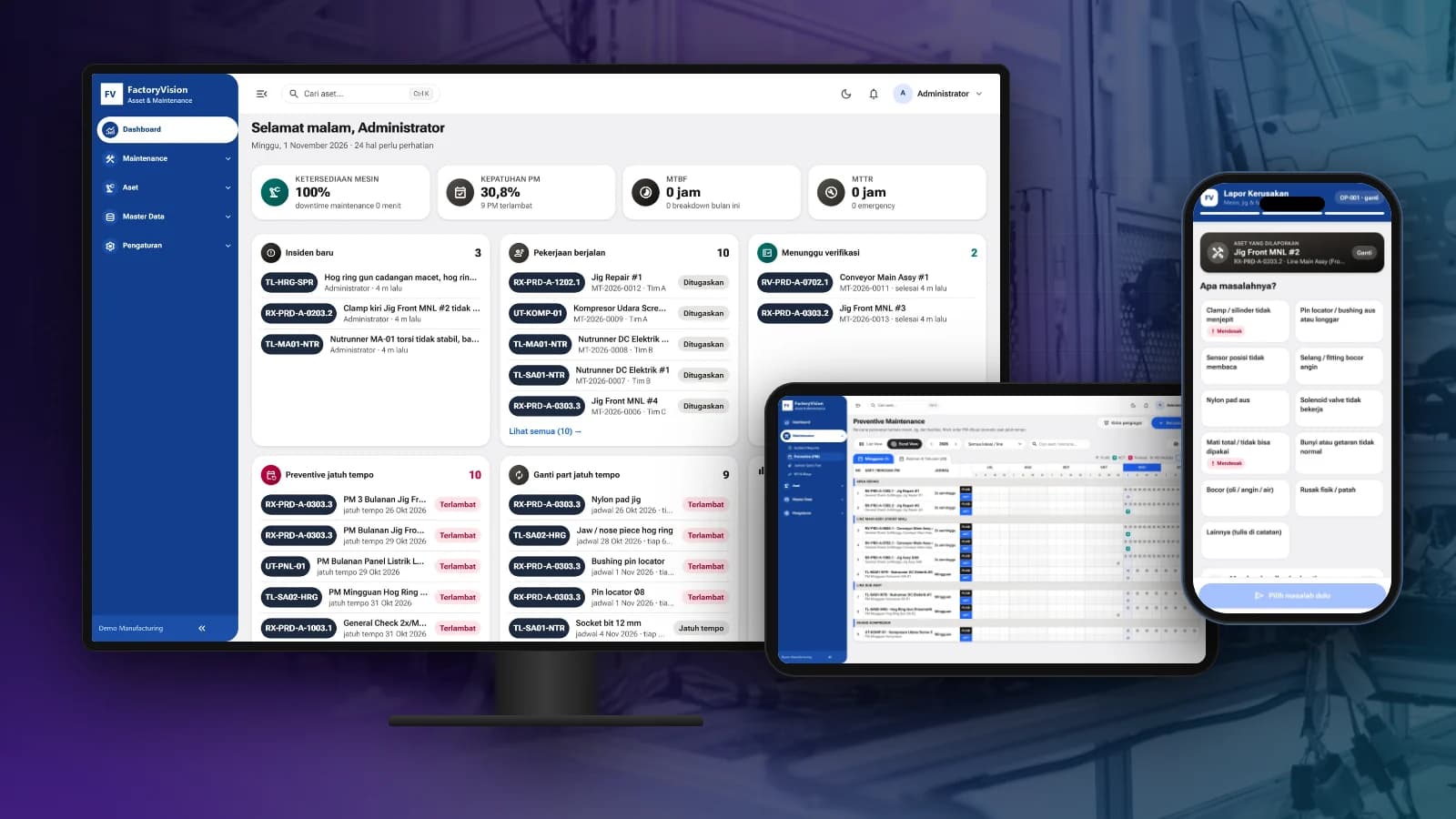
When planning a mobile app, one of the first decisions is the platform: Android, iOS, or both? And should it be built native or cross-platform? The choice affects cost, development time and how the app is maintained later.
Start with your users
In Indonesia, most smartphone users are on Android. For internal apps, such as apps for technicians, couriers or factory operators, companies often choose the devices themselves. For customer apps in certain segments, the share of iOS users can be large enough that it cannot be ignored.
Native: full performance and device access
Native apps are built specifically for each platform (Kotlin for Android, Swift for iOS). The advantages are maximum performance and full access to device features. The drawback is building and maintaining two separate apps if you need both.
Cross-platform: one codebase for two platforms
Frameworks such as Flutter let one codebase run on Android and iOS. For most business apps, such as forms, transaction lists, QR scanning, camera, notifications and maps, cross-platform is more than enough, with more efficient development time and maintenance cost.
When to choose which?
- Cross-platform suits most business apps, customer apps and field apps that need to launch quickly on both platforms.
- Native is worth considering for graphics-heavy apps, intensive real-time processing or very specific hardware integration.
- A single platform makes sense for internal apps on company-issued devices.
Do not forget the server and web side
Business mobile apps almost always need a backend and a web-based admin dashboard to manage data, users and reports. Plan both together so the architecture fits.
Consider offline mode too
For field teams in areas with weak signal, such as warehouses, factories or golf courses, the app should keep working offline and sync data when the connection returns.
Seautomate builds mobile apps for customers, employees and field teams, such as the caddy and scorecard app in OneClub and the technician app in BuildingVision.