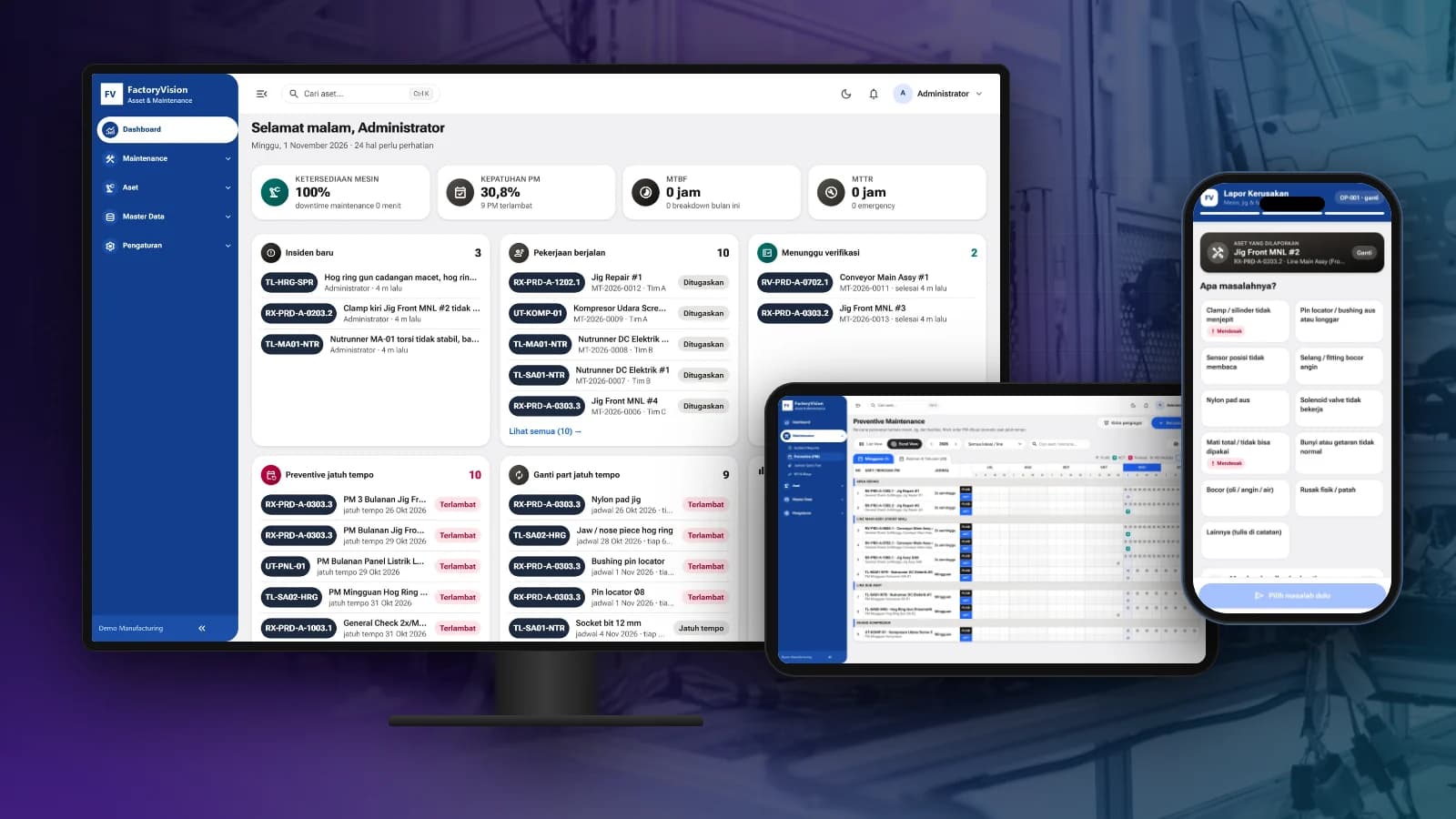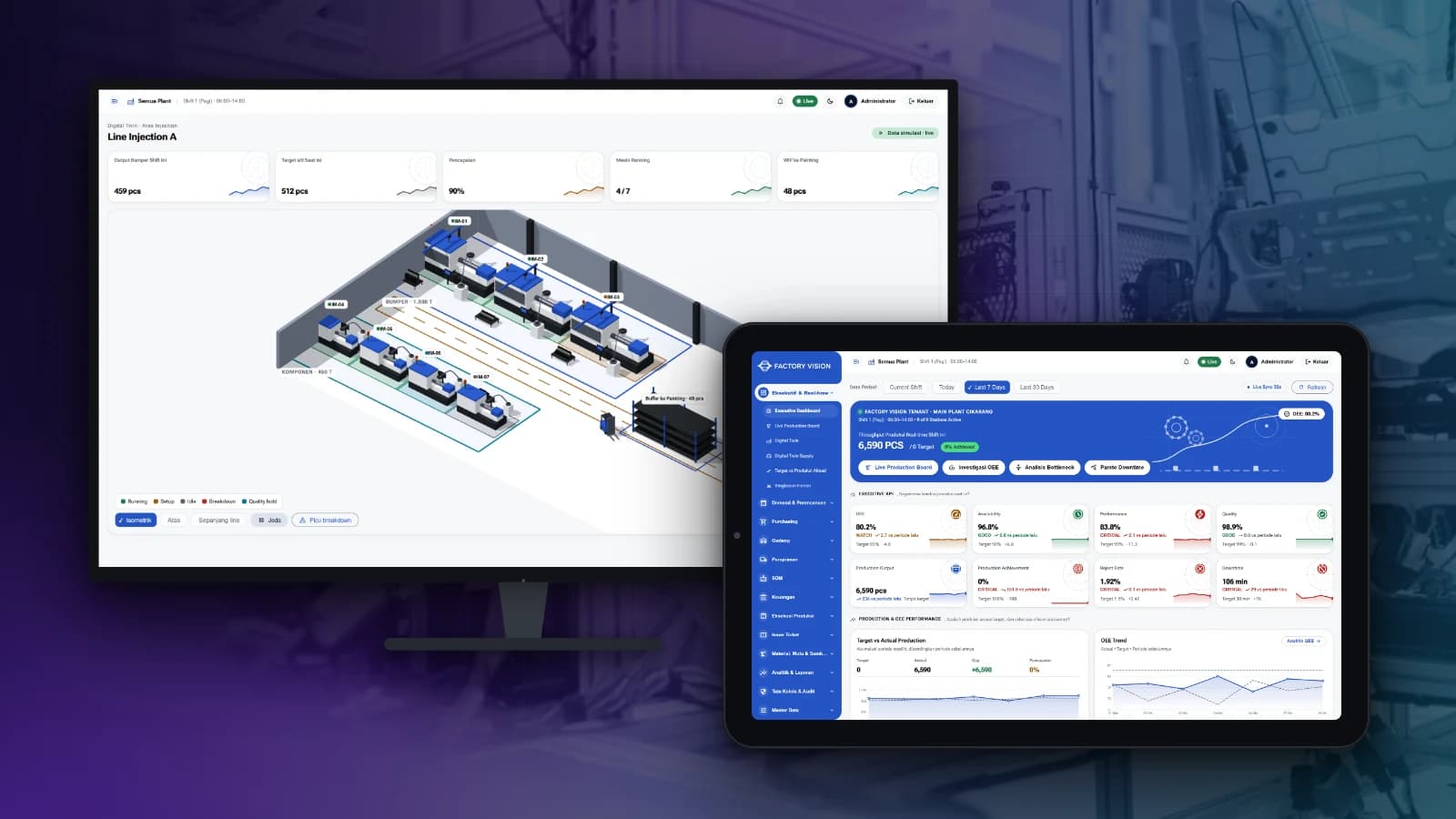
Many factories already use ERP for purchasing, stock and finance. But what happens on the shop floor, which machine stopped, how much each shift produced, and why parts were rejected, is often still recorded on paper or a whiteboard. That gap is what an MES (Manufacturing Execution System) fills.
What is an MES?
An MES records and controls production in real time: work orders, material usage, output and rejects, and machine downtime. This data is turned into indicators such as OEE (Overall Equipment Effectiveness).
MES vs ERP: what is the difference?
- ERP answers business questions: how much to produce, what it costs, and how much stock is left.
- MES answers operational questions: what is being produced right now, how efficiently, and what is holding it back.
They complement each other. Production plans flow from ERP to MES, and actual results flow back from MES to ERP.
Signs your factory needs an MES
- Daily production reports are only ready the next day, after manual recaps.
- You do not know exactly how long machines were down, or why.
- Reject numbers differ between production and quality control.
- Tracing a batch or lot after a customer complaint is difficult.
- Management wants to see plant status without walking the floor.
Measurable benefits
With data captured directly on the shop floor, teams can see the biggest causes of downtime, compare performance across shifts and lines, and act on quality issues faster. Decisions are no longer based on estimates.
Phased implementation
An MES can start with a single production line as a pilot and expand from there. Machine integration (PLC or sensors) can also be added step by step; at first, operator input on a tablet already makes a big difference.
FactoryVision is Seautomate's MES and ERP system for monitoring production, OEE, quality, warehouse and plant finance in one place. See also our solutions for manufacturing.